

What Peaky Blinders Gets Right (and Wrong) About War Veterans
By J.G.P. MacAdam. War primes young men for a life of violent crime—fact or fiction?
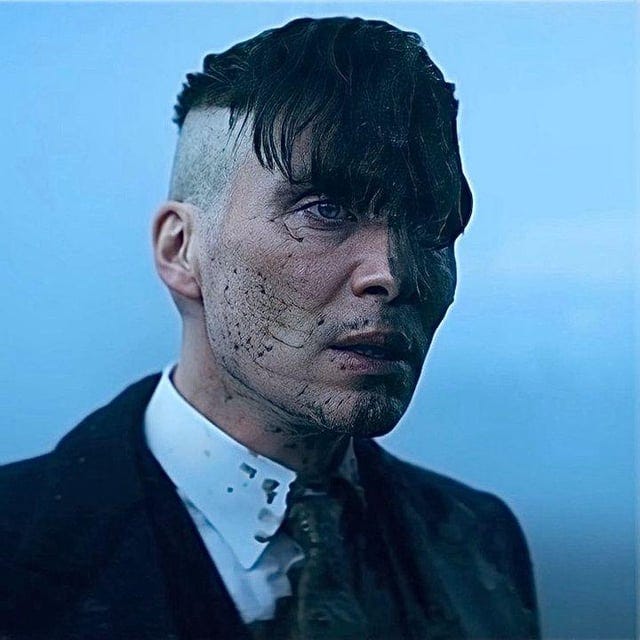
“A career that war exactly prepares veterans for upon return to civilian life is a criminal career,” writes Jonathan Shay in Odysseus in America, published in 2002. Despite laws governing the conduct of war and despite the heavily regimented lifestyle of anyone actively serving in uniform, the ability to steal, cheat, lie, turn a blind eye, sweep pesky problems under the proverbial rug, to “handle” barracks issues involving one or more enlisted personnel without resorting to administrative action, i.e., paperwork—such shady practices yet remain time-honored military skills. Though you won’t find a single one of them hallowed in typeface in a field manual.
In my own experience, I’ve “acquired” a number of military-issue items over a seven-year stint in the US Army. No weapons, sensitive items, or anything like that, mind you. But an extra woobie, a few ammo pouches, helmet liners, assault bags, a couple of other items of materiel with no traceable serial number—a number of these did just so happen to make their way into my possession. Pawning these items at the local army surplus store (off-post, naturally) added a comfortable padding to my meager enlisted-man wallet.
Though this is small fry compared to some heists that I’ve heard of through the rank-and-file grapevine. Midnight raids on supply tents to secure prepackaged muffins and Rip-Its. Cargo pockets stuffed full of ripe apricots from a local farmer’s orchard. The awarding of a Purple Heart for wounds sustained in combat when, glance under that proverbial rug, and that “combat” was actually friendly fire in the form of a poorly plotted artillery shell. The wounded soldier gets an award; no officers get in trouble. Or try this: The laying of a previously “acquired” AK-47 on a civilian corpse to show that they were “armed” before they were killed.
“If you’re not cheating, you’re not trying,” goes a popular refrain among the rank-and-file military. But does this military mentality, or for that matter, war itself, set up veterans for a life of crime? A life constantly seeking the next adrenalin rush?
Shay cites Odysseus’s raid on Ismarus as a case in support of this supposition:
There, I sacked the town and put the men to the sword. We took the wives and much loot out of the town to divide among us, and I did my best to see that every man received his proper share.
Why does Odysseus raid Ismarus in the first place?
Because he can, apparently.
Odysseus, in spinning the yarn of his adventures to his Phaeacian hosts, gives no reason, no special provocation, about why he chose Ismarus. He raids Ismarus because he can. They’re on their way home from the Trojan War. They come across a seaside town. Raid it. Steal the women. Divide the loot. This is what soldiers do—Odysseus’s story seems to imply. Though the war is “over” and Helen returned and Troy burned, the Greek victors, upon their homeward journey, remain in what Shay terms: combat mode.
Many modern readers prefer the seafaring tales of cyclops and sirens, but this overlooks what the Odyssey so very obviously is: a tale of a combat veteran with wounds more psychological and emotional than physical.
While Odysseus did his thieving and murdering, both during and after the Trojan War, wearing a hoplite helmet and horsehair plume, veterans of more modern wars, upon relinquishing their uniforms, tend to adopt the anything-goes attire of a civilian instead. Unless you’re a member of the Peaky Blinders, that is.
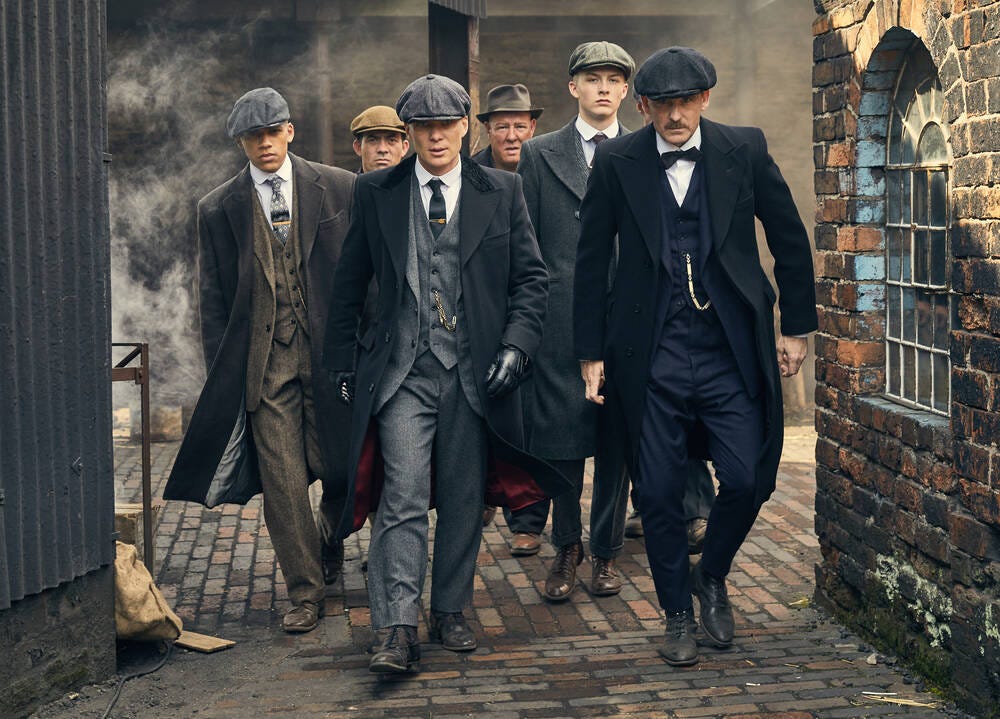
Peaky Blinders, the hit show on Netflix, all six seasons of which this author only managed to make it halfway through, features a rather well-dressed cast of characters. The members of the Peaky Blinders gang don themselves in stylish wool, tweed, and herringbone fabrics. Collared shirts and waistcoats. Dark, earthy charcoal and grey reminiscent of the time and place the show takes place: postwar Britain, specifically Birmingham, center of coal and industry following the Great War, the First World War. Of course, the iconic flat cap with hidden razor blades cuts to the core of the gang’s identity: the use of violent crime to make one’s way in the world. The use of fashion to assert one’s authority. A tailored, barely skin-deep elegance under which hides a bloody mess of unresolved war trauma and working-class poverty.
I was surprised, watching the first episode, to find that the main character, Thomas Shelby, played by Cillian Murphy, leader of the Peaky Blinders, is a war veteran. He was a tunneler. A clay kicker. A mole. Though the Shelby crime family is fictional, it’s referenced in the show that Tommy served in the 179th Tunneling Company of the Royal Engineers, which was a real unit in the First World War that helped break the spine of German resistance.
Here’s an article that aptly explains Tommy’s wartime experiences:
In the series, we see that in his dreams, Shelby is troubled by a mission when tunnelling a hole, a group of German tunnellers break through from the other side of the wall. In the ensuing chaos, one of the men from Thomas’s company is shot and Thomas himself is injured, while he also kills the German soldier at very close quarters. The show suggests that this death, in such close proximity, greatly troubled Thomas and made him the violent man that he was when he returned to Birmingham. In the first episode, we see Thomas smoking opium from a clay pipe and it is suggested that he uses this to ease the stress of his recurring nightmares.
Tommy’s veteran status, particularly his service in the Battle of the Somme, comes into play at pivotal moments in the show. He’s granted export licenses due to a letter he writes to Winston Churchill—citing his service at the Somme. His would-be executioners, upon learning that he used to be a soldier, offer him the due respect of a final smoke. Again and again, Tommy’s trauma and status as a war hero not only defines the core of his character but serves as a plot device, a sign of deference and consideration from other characters, not to mention explanation for some of his—er, more violent behavior.
And Tommy’s certainly not the only veteran in the series. In the first episode, we meet Danny Whizz-Bang as he storms into a bar screaming and throwing his fists. Tommy must tackle Danny to the ground, telling him:
“You’re not an artillery shell, Danny, you’re a man. You’re not a whizz-bang, you’re a human being. You’re alright. You’re alright . . .”
Tommy’s brother, Arthur, the short fuse of the Shelby family, served as a machine gunner in the Warwickshire Yeomanry, at both Gallipoli and in France. Multiple suicide attempts aside, Arthur’s moods—his ups, which are spastic in their debauchery, and his downs, which result in thousand-yard stares galore—create a constant tension in his relationship with Tommy. A constant manly inner conflict that audiences, apparently, can’t get enough of.
Tommy, Danny, and Arthur are wholly incapable of returning to “normal life” after the war. They represent the quintessential stereotype of the haunted, damaged man, of the stoic war veteran self-treating their PTSD with drugs, sex, and violence—the cannon fodder of any viral television show or Hollywood blockbuster. A nine-to-five job shoveling coal? A gig as a bank clerk? Not for them. If anything, having risked their lives for King and Country, Danny, Arthur, and especially Tommy now believe they deserve more.
Ambition drives them.
“It is Thomas Shelby who sees crime as the path to social mobility and in the end, legitimacy,” Dr. Evan Smith points out in his analysis of Peaky Blinders.
Tommy parallels his combat career with a criminal one. His medals, his distinction at the Somme, even his nightmares—they’ve earned him a level of respect, of gravitas, a place in the world. Born in the slums of Birmingham, what else would he have had to look forward to? However, as a war hero, as a returning veteran, as a man who’s risked his life for his country, he’s moved up a notch. Why shouldn’t crime, despite its endless cycles of violence, afford him the same payoff?
Tommy’s not the first veteran to resort to a life of crime once they find themselves back home.
In Odysseus in America, Shay relates the real-life story of Wirey, a pseudonym for one of Shay’s patients at the VA. Wirey joined the US Navy in 1965. He volunteered for the Mobile Riverine Force. Training was rigorous. Five-men crews trained in hand-to-hand combat, psychological warfare, and counterinsurgency. In SERE training, Wirey was starved, beaten, and “interrogated” by the insertion of a gun into his mouth. His specialty was explosives. In Vietnam, he served on a patrol boat on the Mekong Delta, a Viet Cong stronghold.
“We did our own interrogations,” explains Wirey. “One shot from a village and we took everybody out.”
Back in civilian life after the war, Wirey finds himself incapable of controlling his violent outbursts at work, at home. Unable to adapt, drifting from one job to the next—caterer, trucker, rackets, engaging in thefts to “feel alive” again, stealing lock safes then expertly opening them elsewhere with explosives— Wirey ends up serving four separate prison terms.
“What happens is I like pain. Pain makes the nightmares go away . . .” he explains to Shay. “In jail, I made them do me . . .”
In other words, he’d instigate the guards to beat him.
The logic that Shay and shows like Peaky Blinders posit is clear: war + PTSD = violence and crime back home.
That’s the equation we, the audience, are being sold. In both fiction and nonfiction. In the easy-to-consume blurbs on bestsellers and blockbusters. In opening scenes of a hit series. In the stories even veterans tell, like Odysseus, about themselves, about the war.
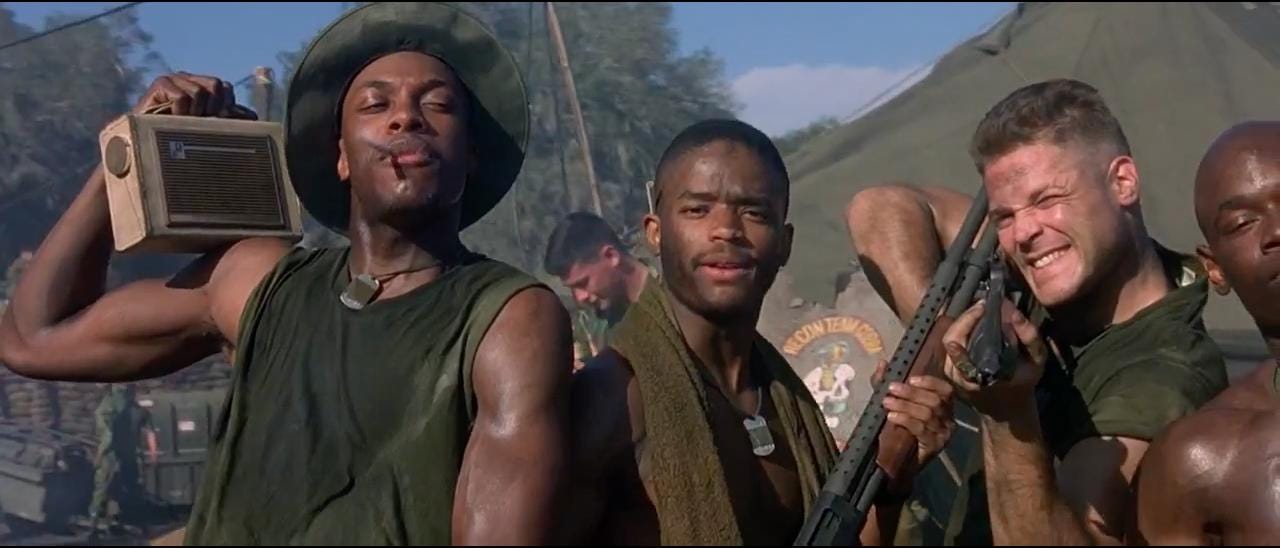
In 1995’s Dead Presidents, based upon the real-life experiences of Haywood T. Kirkland, whose story was recounted in Wallace Terry’s nonfiction book, Bloods: An Oral History of the Vietnam War by Black Veterans, we are once again met with the depiction of a war veteran who has come home, found he is unable to adapt (or that the world refuses to adapt to him), and so, almost inevitably, turns to crime.
In Bloods, Kirkland states:
I had never did a criminal thing before. But I began to plan how we could commandeer and hijack the mail truck. Set up an ambush.
When working for the post office, after the war, Kirkland notices that there were “regular monies” going from the post office to the Treasury Department to be burned. “Old money, they told me. I couldn’t understand that money’s going to be burnt when people is in need . . .”
Kirkland gathers a group of trusted associates to conduct the heist on the mail truck.
We would use composure, coolness, just like when you set up claymore mines or set up booby traps at night. Everybody would be perfectly still, like when the NVA was right on top of us.
The heist goes off with almost military precision. What Kirkland can’t control, however, is, afterwards, one of his associates giving money away on the street and raising a lot of attention. Eventually, Kirkland’s real-life escapade into crime lands him in prison.
When I went before the judge, I was saying that we took the money because the community was in need. There are people out there hungry, I said. [The judge] said that was irrelevant to the crime. He was wounded in World War II. And I don’t think he liked me being a veteran doing what I did.
Kirkland served five years, after a sentence reduction. Another case of a traumatized war veteran returning home only to find themselves engaged in crazy, if not criminal, acts of derring-do. Where have we heard this story before?
In myth, of course. A myth any editor or marketing specialist worth their salt would recognize the money-making potential of. Homer certainly did.
Here’s another particularly apt example:
“[A] young veteran returns home from Iraq with PTSD and turns to drugs in order to cope with his demons. When his money runs out, he turns to robbing banks,” wrote an Esquire review in 2018.
“[A] young man drops out of college, enlists in the Army and goes to war,” wrote Alexandra Alter for The New York Times. “But rather than maturing in the crucible of combat, he comes home shattered, unable to function. He becomes addicted to opiates and starts robbing banks almost on a whim.”
This is the narrative sold to us for Cherry, a 2018 novel by Nico Walker. Nico Walker, an Iraq veteran, while serving time in prison for armed robbery, wrote what seems to be a very auto-biographical tale. As Brian Van Reet, also an Iraq veteran, points out in his review of Cherry, these book blurbs highlight a tried-and-true formula:
[They] imply a strong link between Walker’s PTSD, his addiction, and the robberies he committed. That link could be strong and real in his case, but maybe not, and it could be that there are relationships between these problems, though not so direct a line from one to the other as some might assume. According to the Department of Veteran’s Affairs, PTSD correlates with (but cannot be said to cause) an increased risk of violence among those who suffer from it. When studies on this question control for alcohol and drug abuse, however, PTSD no longer associates with violence at all…. Alcohol and drug abuse, it turns out, are much greater predictors of violent behavior than PTSD is.
Matt Gallagher, also an Iraq veteran, wrote for The Intercept about the 2021 film version of Cherry adapted from the novel. In the film, Nico Walker’s unnamed narrator is played by Tom Holland, i.e., Spider-Man. The film opens with Tom Holland experiencing an epiphany as he points a gun at the skull of a bank teller. Already, in the opening scene, we can see that he’s come a long way, writes Gallagher. “There’s been war and drugs, and other robberies too.”
He takes off the hat and scarf serving as his makeshift disguise and asks the teller to set off the bank alarm . . .
“It’s all right,” he says, lowering the gun that had been directed at her head. “I won’t hurt you.”
This character of Walker, however, the character who turns himself in, who isn’t a perpetrator so much as a victim of the pitfalls of society, bears little resemblance to reality. In reality, Nico Walker was arrested after crashing into an embankment next to a Burger King trying to get away with the cash he’d stolen. He didn’t turn himself in. In the actual robbery in 2011, he didn’t try to comfort the teller whose life he threatened. He said, “Give it to me now, you know what this is,” per an FBI affidavit.
Gallagher explains:
There is at least one truth in the fiction. A bank teller was on the other end of that gun. In the film, she’s referred to as Vanessa. In real life, her name is Rosa Foster, and she was pregnant at the time of the robbery. Until I contacted her last month, she had no idea that her story was no longer her own . . .
“He has Spider-Man portraying him,” Foster told me. “Pardon me for saying this, but what the fuck?”
Erasure doesn’t have to be an act. It can be a process too.
Tell that to Tommy Shelby.
Would the real Thomas Shelby please stand up? Oh wait, he can’t. Because he doesn’t exist. Not in history. Not in reality. He exists only on a screen and in our imagination and in our collective perception of war does to young men.
The hero-ization of criminals and gangsters by Hollywood is nothing new. Look at any Martin Scorcese movie. The Irishman’s main character is a “painter of houses” a.k.a. mob assassin, played by Robert de Niro. The character is, also, a war veteran shown putting bullets in the backs of German prisoners after forcing them to dig their own graves. How he learned to “paint houses” in the first place.
War + PTSD = violence and crime back home
It’s such an enduring formula, I want to give it a name. Call it the Odyssean Criminal Complex. Instant buy-in for why a man—since it’s always a male character—would choose a life of violence and crime. Would rob a bank. Would murder people for a living. The numbness of war translates to numbness back home, right? But reality’s never that simple. Why aren’t all combat veterans like this, instead of a criminal minority though that minority may get disproportionate attention in modern media and in the stories told of war veterans going back millennia? Why do most combat veterans actually manage to move past their wartime experiences and go on living a normal life?
My answer: Because most people are resilient. Most people care about not hurting others, even after enduring war’s inhumanity, or especially because of it. Most people, even when broken, want to heal.
But most people’s stories, prosaic as they are, aren’t always the ones that make for bestsellers and blockbusters and hit television series. Even Jonathan Shay’s Odysseus in America with its claim that “a career in war sets up the veteran for a career in crime” and cites nonfiction examples to that end makes the mistake of anecdotal evidence. In other words, Shay cherry-picks the most dramatic and spectacle-worthy of veteran’s experiences to highlight and include in his book; a book which is all about aligning modern-day veteran experiences with the myth of Odysseus, as though Odysseus was ever an actual person or that Homer’s depiction of him in any way resembles reality. A handful of cases of vets turning to crime, especially among a population of a million or more veterans, tens of thousands of whom probably experienced combat firsthand, does not equate to every veteran being a numbed-out, shell-shocked wreck of a human being ready to commit violence at the drop of a hat.
That’s why I only made it about halfway through Peaky Blinders—why I turned it off.
In Thomas Shelby, I glimpsed a patina of truth, of authenticity, a dim reflection in the mirror-screen, but only a glimpse. The rest: merely more stage-prop. And what a disservice that does to those who have been to war and returned.
J.G.P. MacAdam is the first in his family to earn a college degree. His publications can be found in The Colorado Review, JMWW, and Pithead Chapel, among others. His novelette, A Square of Dirt, about the birth, life, and death of a firebase in the Tangi Valley, Afghanistan, is available from ELJ Editions. Follow him on Substack.

Consequence Forum’s Writing Classes
Sharpen your craft, discuss project ideas, and find new writing groups